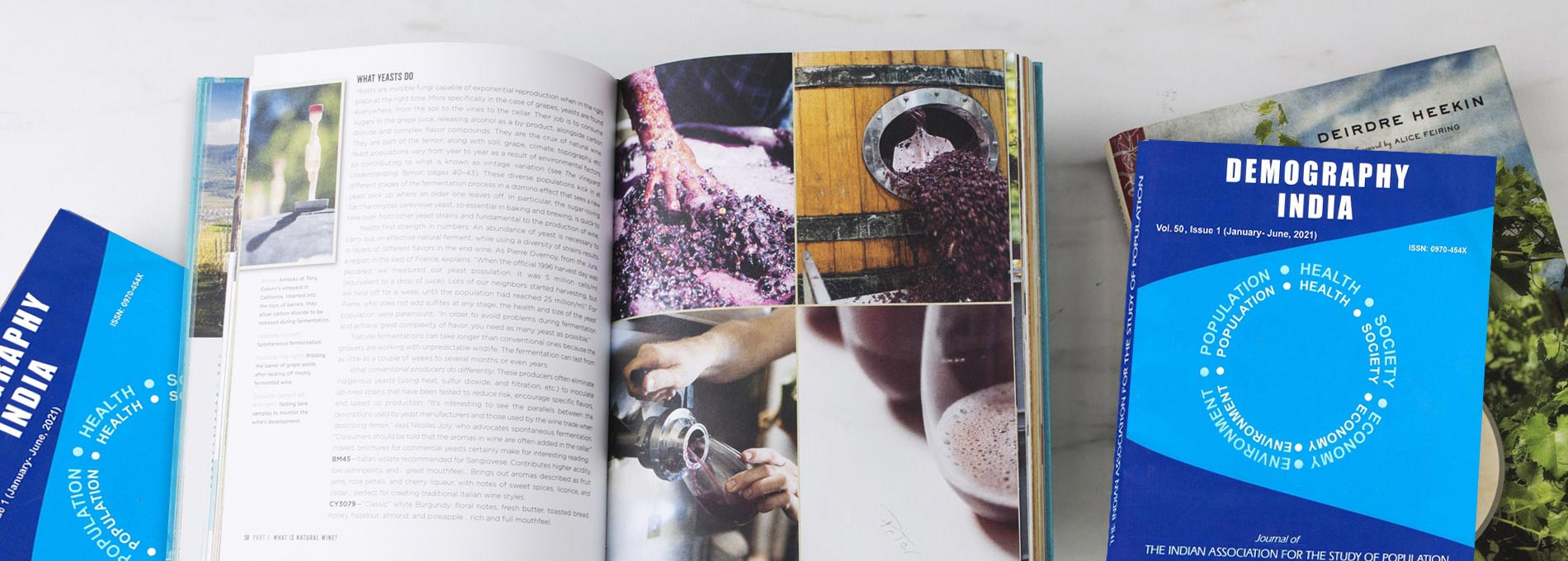


Demography India is an Official Journal of Indian Association for the Study of Population (IASP) which is published twice in a year and now it is an open access peer-reviewed journal.
Read MoreAuthors need to register with IASP prior to submitting or, if already registered, can simply log in and begin the submission.
Read MoreThe journal aims to provide a platform for researchers worldwide to promote and share cutting-edge knowledge and advances in different areas of population sciences.
Read More
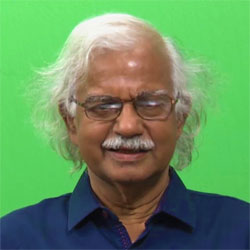 I am very happy to take over asthe Chief-Editor of Demography India, an online, biannual official publication of Indian Association for the Study of Population (IASP). Continuously been published for almost fifty years, it focuses on the population dynamics in India and abroad. Being interdisciplinary in nature, the journal provides a platform tothe national and international scholars working on multiple issues pertaining to population and development tocommunicate their research findings acrossthe different regions of the world. The articles published in the journal have always reflected the trend in population studies. Starting with technical concerns regarding estimation of fertility, mortality, migration, and urbanization in 1970s, over the years it has covered population policy issues, reproductive health concerns, gender, development and empowerment, nutrition, employment and the impact of digitalization. The journal is open to new ideas and frontier areas of quality research. Adding to its prestige, the journal has a sound peer review system.
Our aim is to add to the prestige of Demography India, through a rigorous system of peer review, a standard formatting and language editing to bring it at par with the best international journals on population and related subjects. Both theoretical and empirical research papers, articles and notes are invited from social scientists and demographers based on large scale data, small primary data, meta-analysis and new theoretical discoursesfor the consideration of publication.
On behalf of the IASP and the editorial team, I express sincere thanks to all the reviewers for helping the journal with their scholarly comments, and recommendations in time, to enable publication of good contributions.
Arun Kumar Sharma
Emeritus Professor of Sociology (Ret.)
Indian Institute of Technology, Kanpur
The editorial team is happy to present the first issue of Volume 55 (January-June, 2026) of Demography India. This issue includes 13 papers including one invited paper, one paper under the senior demographer column, nine other research papers, Prof. P. P. Talwar Award (IASP) paper, and one note. The invited paper by Prof. P. M. Kulkarni explains fertility decline in India from an alarmingly high level to a worryingly low level. In senior demographer’s paper, Prof. Suresh Sharma (jointly with Ms. Vandana Sharma) focuses on ecological epidemiology of neonatal vulnerability in India. Other papers cover a diverse range of topics including a technical paper on estimating religious differences in fertility in Canada, and issues related to health and immunization, urbanization in the North-East, child marriages in West Bengal, interstate migration, political determinants of health in India, and data quality.
We express our sincere gratitude to IASP President, Prof. Suresh Sharma, IEG, for supporting the activities of this journal. We also express our appreciation to all our reviewers for their valuable insights and timely feedback on the research papers submitted for publication. We are also thankful to the editorial staff of the IEG for providing support in publishing the journal. With the unwavering support of the demographic community in India and abroad—as well as the collaboration of social scientists working on population, health, and public policy issues— we aim to elevate Demography India to a new height of academic quality and impact. Together, we will shape a journal that continues to serve as a valuable resource for knowledge exchange and evidence-based decision-making.
It is time that the demographic community of India provides a critical forum for debating and guiding population policy in India, a country whose population is marked by several contradictions. As per NFHS-5 the country had achieved a below replacement level fertility (TFR of 2.0) several years ago and the same trend continues. NFHS-6 Fact Sheet for India exhibits the same TFR. Yet, the population is growing at a rate almost 1 percent per year. At least for 20-30 years there is no chance of population decline. Total Marital Fertility continues to be high and there is still a scope for raising use of modern contraceptive methods. It must be stressed that there are remarkable differences in TFR and TMFR by education, class, region, religion and urban-rural differences. Since population growth differentials have already become mainstream political issue there is a need to critique universal policies of incentivisation of childbirths. There is also a need to examine our policies on migration and migrants’ political and socio-economic rights. Prof. Bhagat has initiated this debate in an IHD working paper. I have reviewed it in this journal so that the demographic community feels encouraged to work on human rights. We expect more papers on these debatable issues in the future.
We would be happy to receive more books and reports for review in the next issue of the journal. Those who have published a book or a research report and would like it to be reviewed in the next issue of the journal, are requested to send two copies of the same to me or Dr. Priyanka Yadav, IEG. Unsolicited book reviews, written on their own, would not be published.
We hope that you find this issue interesting. If you have any suggestions to improve the quality of the journal, you may contact the chief editor at arunk@iitk.ac.in or 4aksharma@gmail.com.
Arun Kumar Sharma, Senior Professor, IIT Kanpur (Ret.)
Chief Editor, Demography India
Purushottam M Kulkarni
Pawan Kumar, Pritu Dhalaria, Sanjay Kapur, Ajeet Kumar Singh, Pretty Priyadarshini, Ajay Kumar Verma, Kapil Singh, Bhupendra Tripathi, and Arindam Ray
Md Selim Reja and Md Emdadul Hoque
Mala Dey, Sambaran Mondal, Sudipta Banerjee and Shankarashis Mukherjee
Arnob Paul and Kanchan Devi
Pratyasha Tripathi and S. Lalitha
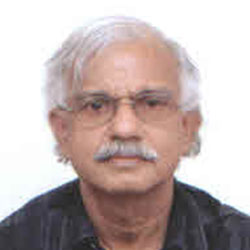
Dr. A.K. Sharma
Chief Editor
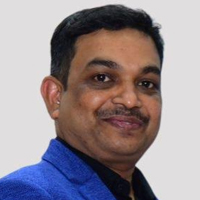
Dr. Jalandhar Pradhan
Associate Chief Editor
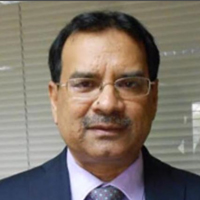
Dr. Irfan Khan
Associate Chief Editor
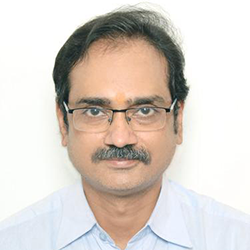
Dr. Ashish Mishra
Associate Chief Editor
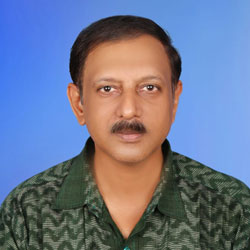
Dr. Rajesh Kumar Chauhan
Managing Editor
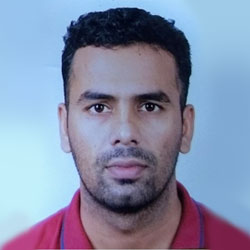
Dr. Gudakesh
Managing Editor
Dr. Priyanka Yadav
Associate Managing Editor
Dr. Vandana Sharma
Associate Managing Editor
Dr. Ankita Shukla
Associate Managing Editor
Dr. Moradhvaj Dhakad
Associate Managing Editor
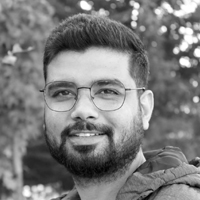
Dr. Ankit Sikarwar
Associate Managing Editor
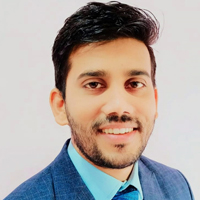
Dr. Shekhar Chauhan
Associate Managing Editor