Journal Archive (Year-wise)
Demography India, publishes high quality original research and emerging issues in population processes; dynamics of fertility, mortality, and migration; and linkages with socioeconomic, biological and environmental change across times, spaces, and cultures.
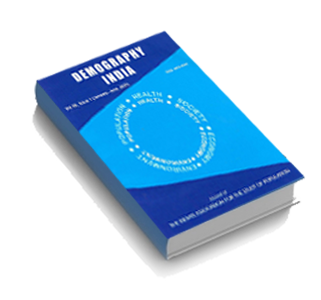
Demography India Vol. 51, No. 2, December 2022
From the Chief Editor’s Desk
I am honored and delighted to have the esteemed privilege of presenting this issue of Demography India. In line with the rich tradition of IASP and Demography India, this particular issue covers a diverse range of topics concerning theoretical and practical demography. It encompasses insightful articles on various subjects, such as modeling the age distribution of infant deaths, understanding migration patterns based on aspirations, exploring self-employment and occupational mobility among return migrants from Gulf countries, evaluating the effectiveness of the ICDS program and ANC services, analyzing the impact of structural factors on menstrual health services, investigating the determinants of hypertension, examining factors influencing nutrition levels among women in South Asia, and assessing the quality of NSS data on morbidity. Moreover, there is a thought-provoking review article on gender, youth, and the demographic shifts occurring in India.
By publishing these articles, we aim to showcase our unwavering commitment to disseminating both technical and substantive research findings. We extend an open invitation to scholars and experts to contribute their work on themes related to demographic transition, program implementation, and critical analysis of population policies in India. We are confident that Demography India will continue to fulfill the data and methodological requirements of academicians, policymakers, and community organizations across the country. We also welcome research papers, articles, and notes on the international population situation, from researchers working abroad, particularly those with implications for policy-making in India.
I would like to express my sincere gratitude to IASP and its president, Prof. Suresh Sharma, IEG, for entrusting me with the prestigious position of Chief Editor of this journal. I am deeply committed to maintaining the continuity and impact of the journal, ensuring its growth and relevance in the field. Furthermore, I extend my heartfelt appreciation to all our reviewers for their valuable insights and timely feedback on the research papers submitted for publication. I also particularly thankful to IEG faculty and staff for various types of support in publishing the journal. A special acknowledgment is due to Dr. M. Vishnu Vardhana Rao, the outgoing Chief Editor, whose leadership played a pivotal role in shaping this issue.
With the unwavering support of the demographic community in India and abroad, as well as the collaboration of social scientists working on population, health, and public policy issues, we will elevate Demography India to new heights of academic quality and impact. Together, we will shape a journal that continues to serve as a valuable resource for knowledge exchange and evidence-based decision-making.
Dr. Arun Kumar Sharma
Chief Editor, Demography India
Some Probability Models for Age at Infant Death and Estimation Procedure
Brijesh P. Singh, Shweta Dixit, and Deepak Kumar Maurya
ICDS System Strengthening Program: Impact on Nutrition and Health Counseling Coverage among Pregnant Women in Palghar, India
Abhishek Kumar, Ruby Alambusha, Smriti Sharma, and William Joe
Assessment of NSS data on morbidity: Is incidence appropriate for estimating the burden of disease?
Shewli Shabnam and Nandita Saikia
Hypertension Predisposing Middle-aged Indians to Heart Diseases: Insights from NFHS-5 (2019-21)
S.K. Singh, Ayantika Biswas, Vrijesh Tripathi, Kirti Chauhan, and Gudakesh
Determinants of Nutritional Status among Women in South Asian Countries: A Cross-Sectional Study
Hanumant Waghmare, Nasim Ahamed Mondal, and Ravi Durga Prasad
Migration through aspiration: A model based investigation
Ardhendu Banerjee, Arindam Gupta, and Asis Kumar Chattopadhyay
Occupational Mobility and Self-employment of the Gulf Returnees in Villages of West Bengal, India
Snigdha Banerjee and T.V. Sekher
Menstrual Knowledge, practices, and restriction among college going students in Lucknow, India
Absar Ahmad, Surbhi G. Gar, Suman Gupta, and Ruqayya Alvi
Antenatal Care Services Utilization in Rural Jammu and Kashmir: An Empirical Study from the Northwestern Himalayan State of India
Raj Kumar, Jogindar Singh Chauhan, and Ajay Sanotra